As data centers and edge devices generate more heat and consume more power, this review explores how AI-driven cooling and intelligent control strategies could cut energy use, improve responsiveness, and shape a more sustainable digital infrastructure.
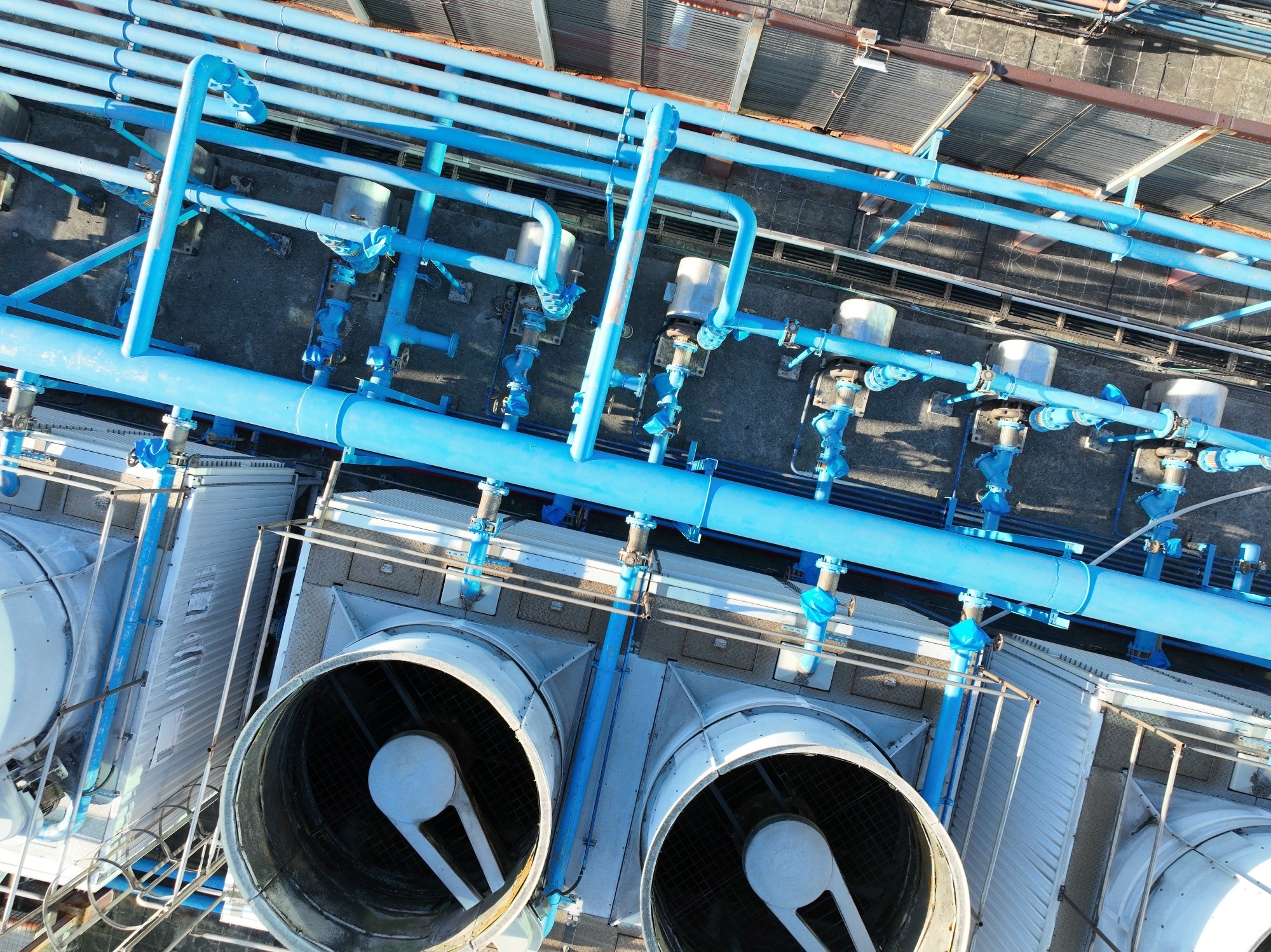
Survey on AI-Based Predictive Cooling in Data Centers and Edge Devices. Image Credit: eric1207cvb / Shutterstock
A new review by Dr. Nilesh Jain, Associate Professor at Mandsaur University, in the Journal of Global Research in Multidisciplinary Studies (JGRMS) examines artificial intelligence (AI)-based predictive cooling in edge devices and data centers (DCs). Jain discusses broader thermal management and thermochemical process-control topics. The review surveys existing cooling technologies, control strategies, and AI methods relevant to thermal management.
Air Cooling Methods for Data Centers
Air conditioning approaches use fans to cool the refrigerant in the condenser, with the heat dissipated directly into the ambient air.
Direct air cooling is inexpensive and simple, particularly in regions where the ambient air temperature and quality are within the information technology (IT) equipment’s acceptable range. Yet, the approach has limitations: it performs poorly in polluted or hot conditions, as its effectiveness is affected by ambient air conditions.
Indirect air cooling uses a heat exchanger to remove heat by exchanging heat with a coolant or water, which then cools by heat transfer through the air. Heat exchangers are common in indirect air cooling systems in DCs.
In the evaporative cooling process, cold air is generated by absorbing heat as water evaporates. It enhances thermal management by increasing humidity and lowering air temperature.
In eco-conscious buildings, evaporative cooling systems combine natural evaporation with air cooling to maintain tolerable indoor temperatures while reducing Heating, Ventilation, and Air Conditioning (HVAC) system energy consumption.
Liquid Cooling Systems for Server Hardware
In liquid cooling technology, the high specific heat capacity and thermal conductivity of liquids are used to remove heat effectively and maintain a safe operating temperature range for the equipment.
A circulating coolant is used to submerge the heat-emitting electronic components in an immersion liquid cooling system, leading to a rapid rate of heat exchange. While the IT equipment is operating, a non-conductive coolant, such as fluorinated fluids, silicone oil, or mineral oil, is used to fill the entire system.
At the chip level, liquid cooling is an indirect method in which cold plates are mounted on server graphics processing units (GPUs) and central processing units (CPUs) to manage heat dissipation. For direct-to-chip cooling, it uses warm water as a coolant, which is a major eco-friendly feature of this method.
Unlike other liquid-cooling systems, heat exchange in spray liquid cooling is achieved by spraying coolant directly onto heat-conducting surfaces or electronic equipment using specially designed nozzles. Subsequently, the heated coolant is recovered and pumped back to the coolant distribution unit for cooling.
Machine Learning and Deep Learning for Cooling
Reinforcement learning (RL), an advanced intelligent control technique, can effectively perform adaptive performance optimization. RL techniques are commonly applied to improve DC cooling systems, making them more responsive and energy-efficient in dynamic and complex environments.
The review also discusses machine learning and deep learning (DL) approaches more broadly, and some examples extend beyond data centers to other thermal-management applications, including batteries.
Recent advances in deep learning have expanded the tools available for time-series processing, data analysis, and image recognition. The paper also includes broader examples from thermal management beyond data centers, including batteries.
These DL methods are advantageous for thermal management in batteries, helping to address the limitations of conventional methods in state prediction, numerical thermal behavior modeling, and defect diagnosis.
Research and applications of convolutional neural networks (CNNs) have enabled the estimation of battery states and spatial thermal parameters. CNNs are highly effective in processing multidimensional data.
Similarly, recurrent neural networks (RNNs) handle sequential data by capturing relationships between past and future time steps in a neural system. RNNs consider both past and present aspects of a sequence when making predictions.
In residual neural network (ResNet) architectures, signals skip one or more layers via residual connections, allowing more direct information flow from the input to the output.
This helps address issues like vanishing and exploding gradients, as well as performance degradation when training very deep networks. As an extension of CNNs, ResNet improves the stability and efficiency of DL models and is widely used for complex feature recognition tasks.
Recent AI Cooling Studies and Process Control
A 2023 study by Mebratu et al. developed an RL-based framework to support decision-making. The methodology was based on the contextual bandits approach and the Markov Decision Process (MDP). An RL system contains states, agents, actions, rewards, and environments.
In this situation, the agent (learner) monitored the state of a liquid-cooling system, assessed outcomes, and made decisions. The agent made informed decisions, such as identifying when a leak occurs, as it was trained on both virtual and physical data representing the cooling system environment.
In another 2025 study, Chen et al. presented an innovative approach to energy-efficiency prediction in DC cooling systems by integrating feature selection with a DL model. The method used a three-step feature selection process, including minimum-redundancy maximum-relevance, extreme gradient boosting, and non-dominated sorting genetic algorithm II, for input feature and hyperparameter optimization.
This improved prediction accuracy and reduced the need for extensive sensor data. Thus, the resulting deep neural network (DNN) processed time-series data without depending on steady-state assumptions.
Beyond cooling in data centers and edge devices, the review also discusses parameter control in thermochemical treatments such as pyrolysis, gasification, and combustion, including the roles of temperature, pressure, heating rate, and residence time in system performance and energy output.
This broader discussion reflects the paper’s interest in intelligent thermal management more generally, not only in server and edge-computing environments.
In conclusion, AI techniques, specifically DL, have significant potential in predictive cooling, increased energy efficiency, and real-time adaptive control. However, the paper is best understood as a broad survey of cooling technologies, control strategies, AI methods, and selected thermal-treatment topics, rather than as a single new experimental study.
 AI Success Will be Determined by Ecosystem Preparedness, not Model Sophistication, Says ALSO Group