A new AI approach shows that microscopic rock images can reveal how well reservoirs store and transmit fluids, opening the door to cheaper, faster subsurface analysis for energy and storage projects.
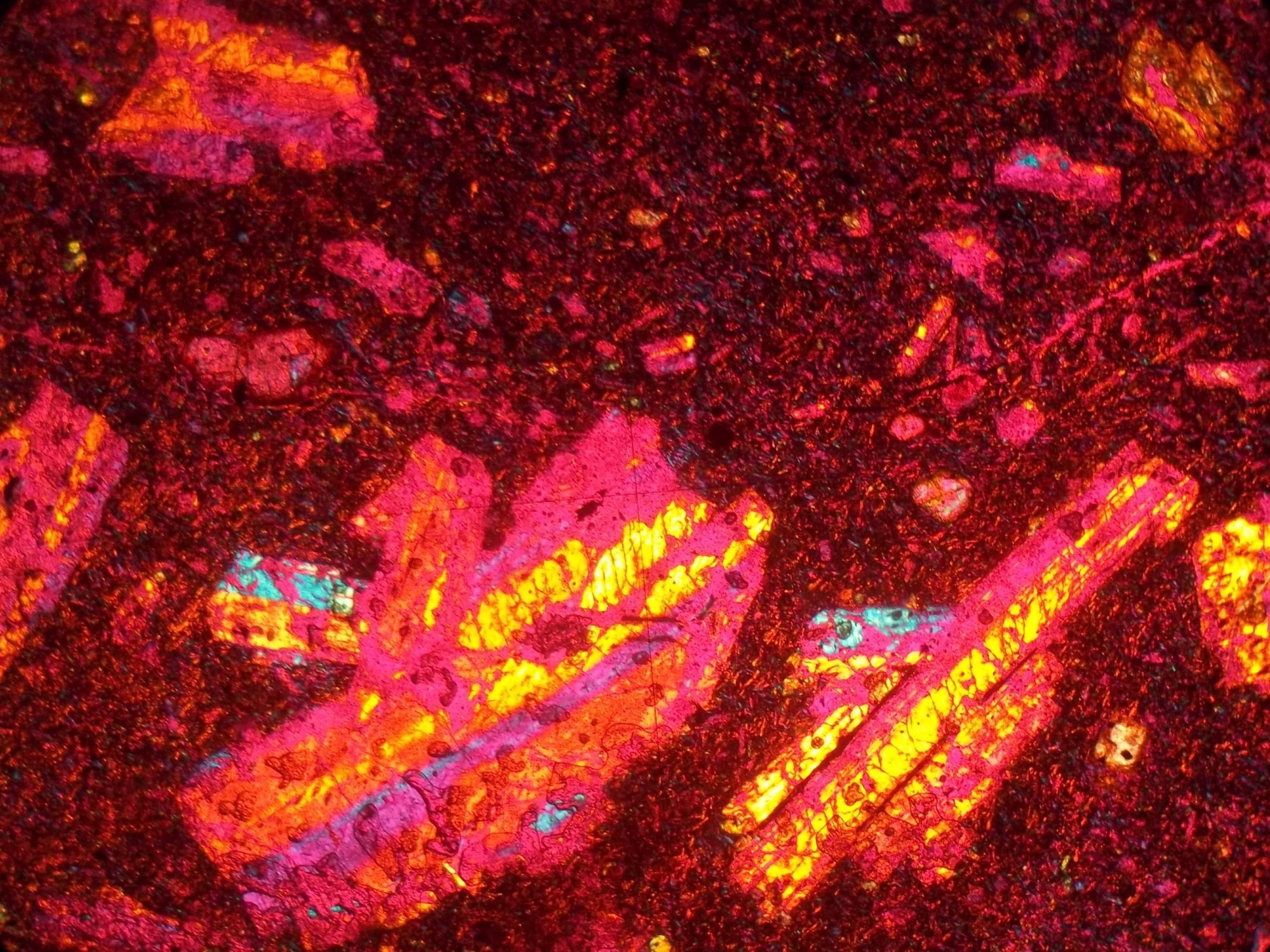
Research: Unlocking the potential of legacy data for future geoenergy and storage applications: Porosity and permeability prediction based on machine learning applied to petrographic data. Image Credit: anindyaestiandari / Shutterstock
Geologists at the Institute of Applied Geosciences at KIT, Germany, developed a novel machine-learning regression approach to estimate rock porosity and permeability from microscopic analysis of 30 µm-thick sections. The study demonstrates how artificial intelligence can extract key reservoir properties from visual mineral data, offering a faster and more scalable alternative to traditional laboratory methods.
Porosity and Permeability in Geoenergy Applications
Porosity quantifies the volume within rocks that can store fluids and gases, while permeability measures how easily those fluids can flow through the rock. These properties are critical for geoenergy production, including geothermal energy and hydrocarbons, as well as for storage applications such as hydrogen, natural gas, and carbon dioxide (CO2).
Thin Section Analysis Enables Data-Driven Modeling
The researchers used thin sections to analyze mineral distribution, composition, and texture features, which are traditionally linked to rock properties. By applying machine learning regression, the team captured complex, non-linear relationships between these microscopic characteristics and macroscopic reservoir properties.
Large Multi-Well Dataset Supports Model Accuracy
The models were trained on a dataset spanning 51 wells across four major reservoir lithologies in central Europe. The data, collected over 25 years by more than 21 petrographers, provided a diverse and realistic foundation for evaluating model performance.
The machine learning models achieved strong predictive accuracy, with an R² value of 0.87 for porosity and 0.82 for permeability. Error rates were also acceptable given the variability in data collection, with RMSE values of 2.23% for porosity and 0.64 (orders of magnitude) for permeability.
Reducing Costs in Reservoir Characterization Workflows
Traditional reservoir characterization often relies on extracting core samples from deep underground, a process that is both expensive and time-consuming. This limitation reduces access to high-quality, undisturbed rock samples for laboratory analysis.
The new AI-driven approach offers a cost-effective alternative by enabling property prediction directly from thin-section imagery, potentially reducing the need for extensive core sampling.
Mineral Texture and Cement Influence Reservoir Quality
The study highlights that mineral composition, cementation, and pore structure significantly influence reservoir quality. Cement can block pore spaces, while mineral shapes affect how fluids move through the rock.
Understanding these microscopic features within the broader geological context, such as pressure, temperature, and chemical evolution over millions of years, can improve predictions of reservoir performance in unexplored regions.
Future Applications Using Drill Cutting Fragments
The researchers suggest that the approach could be extended to analyze drill cuttings, small rock fragments generated during drilling operations. These materials are widely available at drilling sites and could provide a low-cost data source for predicting reservoir properties.
If successful, this extension could further reduce operational costs and enable real-time assessment of subsurface conditions during drilling, enhancing decision-making in geoenergy and storage projects.
Source:
Journal reference:
- Busch, B., & Hilgers, C. (2026). Unlocking the potential of legacy data for future geoenergy and storage applications: Porosity and permeability prediction based on machine learning applied to petrographic data. Artificial Intelligence in Geosciences, 7(2), 100202. DOI: 10.1016/j.aiig.2026.100202, https://www.sciencedirect.com/science/article/pii/S2666544126000183
 Guidelines Needed as AI Embraced By Mental Health Practices